
First off, let me just say that I LOVE Nordic Walking and that will never change (see this blog on why I fell in love with Nordic Walking), but somewhere along the line I realised that to really help as many people as possible, Nordic walking could only ever be one tool in my toolbox.
The Problem I Kept Seeing
Running a Nordic walking session is fun; I love the group dynamic. There’s the chat and camaraderie (and don’t forget the obligatory ganging up on the instructor!), but my ability to get to the root cause of a person’s problem is limited in this setting.
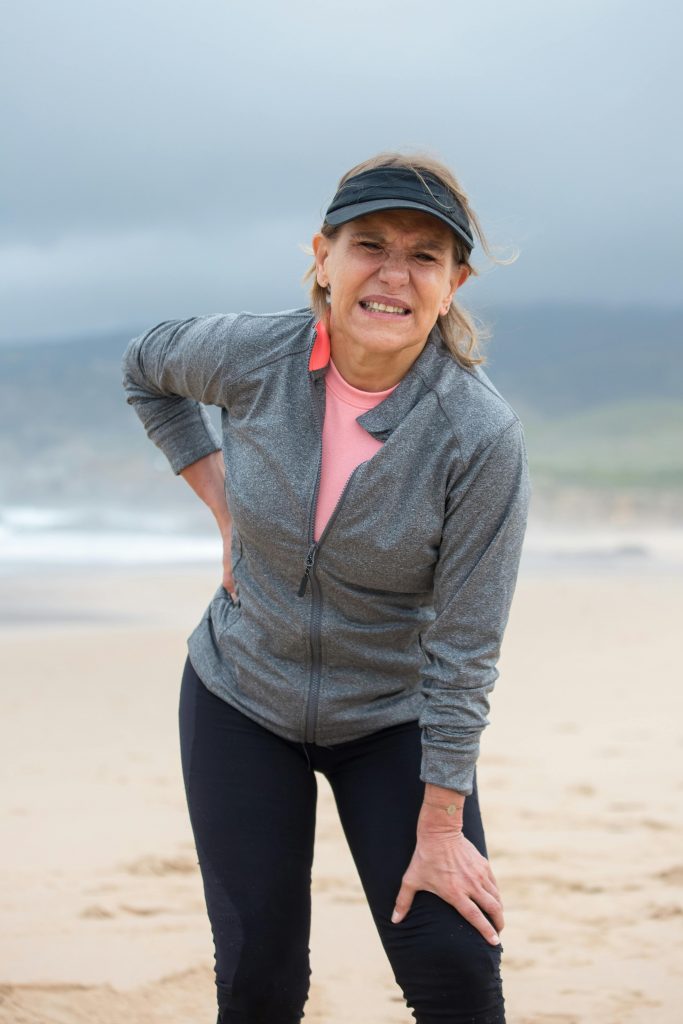
For over a decade I watched walker after walker slowly stop coming along to my sessions because walking had become uncomfortable, frustrating or harder than it used to feel, saying they were taking ‘a little time off’, never to return.
On following up with them some years later, I would hear how they now felt less confident in their walking and no longer enjoyed it the way they once had.
That really bothered me.
The Barriers That Stop Women Walking
Part of what I discovered from my conversations with these capable women was that breaking down barriers is essential.
Barriers they would tell me about were:
pain
breathlessness
reduced mobility
lack of energy
lack of motivation
lack of time
and lack of confidence
But there was also another barrier – the ‘Nordic’ aspect itself.
In my experience, Nordic walking seems to present a barrier to many people, with the polite ‘maybe one day’ or the ‘that’s not for me’ responses when I’d suggest trying it out.
Whether it’s a person’s perception of what it is and who it helps, the fact they may need to use ‘equipment’ or because it’s not a mainstream activity, it seems that the majority of people interested in walking do not to want to walk with poles…and that’s fair enough. It’s not everyone’s cup of tea no matter how impressive the benefits are.
The problem is that this perceived barrier prevented women coming to me for help because they just didn’t identify with Nordic walking.
Why I Changed My Approach
This is when I knew that my strategy had to change. I had to find a way to keep these women walking. So, I went to work.
I trained in gait assessment, joined mentorship groups, learned about footwear, immersed myself in research and podcasts, refreshed my biomechanics training and took on some case studies involving women struggling with problems that affected their walking ability.
I also reached out to social media asking questions like:
What problems are you having that affects your enjoyment of walking?
What has helped?
What hasn’t?
What do you need?
In short, I listened and I learned.
Why Walking Coaching Made More Sense
Whilst group Nordic walks could bring the fun, social and mental health benefits, only by taking dedicated time with a person could I help identify a problem and offer a solution – and this is where walking coaching comes in.
Whilst a good instructor teaches skills and techniques, coaching is more about partnership. It’s about listening, understanding what’s getting in the way and helping someone find an achievable path forward.
Step One – Time to Listen
This crucial step is one of the most important but overlooked parts of helping someone move better. Dr Courtney Conley, Chiropractor, founder of Gait Happens and a trusted voice for me, always says:
‘If you listen to a person they’ll tell you what’s wrong, if you listen long enough they’ll tell you how to fix them’
And this is so true.
Step Two – Assess, Don’t Guess
Through walking assessment, simple movement testing and looking at how the body moves together as a whole, I can start to identify the limitations, compensations and habits that may be affecting someone’s walking.
Step Three – When a Plan Comes Together
Working with the client to create a plan they’ll actually stick to is one of the most important parts of coaching.
No time? No problem – start with two short movements twice a week.
In too much pain right now? That’s ok – this week we’ll focus on a simple breathing technique.
Every small change is a step in the right direction and those small steps soon add up.
Creating WalkFitter
Whilst this new strategy was all well and good (and extremely enjoyable!), it was still limited by how much time I had to dedicate to it.
Working a full-time job in an unrelated field, whilst also having a family to look after, doesn’t leave much time to help as many women as I’d like to.
I pondered for a long time over what to do, and then it hit me – I needed to create an online platform with the resources to help as many women as possible! And so WalkFitter was born.
I set to work, creating:
instructional exercise videos addressing the common issues
a self-assessment quiz to help people find their starting point
an easy to follow roadmap to guide them
fitness plans to help them achieve their walking goals
and guided audio walks to help motivate them to walk more and move better
Whilst I’m unable to coach hundreds of women on a one-to-one basis, I can now help by providing a place where they can contact me, ask questions and receive support.
Most importantly, I created a community where women could learn from each other and cheer each other on.
Do I Still Recommend Nordic Walking?
Absolutely, but not to everyone and only if I feel that it’s the right fit for them.
Do I still run my Nordic walking sessions? Yes and no.
My previously trained Nordic walkers will always be at the heart of my walking group and I’ll certainly give detailed instruction to newcomers who want to try it out, but my sessions are now about reducing barriers to walking, so poles are not necessary.
What My Walking Sessions Look Like Now
Not that much different to be honest. We still walk and I still incorporate exercises to improve walking technique. We still have fun, we still chat, and yes – they still gang up on the coach!
The difference is that there’s now much less emphasis on the poles and much more focus on helping people to move better.
Helping Women Walk Further, Faster and Fitter
Re-positioning myself as a walking coach has allowed me to really dial in to what women need and to help them get better results.
It allows me to look through a wider lens, taking a whole-person approach.
I use walking as a catalyst for movement and well-being but I now focus on helping clients:
address limitations
overcome mental blocks
build confidence
improve movement
and reach personal goals
Because ultimately my goal is simple – to help women keep walking well for life.
If you’d like some support with your own walking, you can find out more about the WalkFitter membership here.
Or, if there’s something affecting your enjoyment of walking, let me know in the comments below; I’d love to hear about it.
I read the article and actually got excited to try to get back to Nordic Walking. Thank you